
To strengthen the company's quality management foundation, empower frontline teams with professional QC tools and improvement methods, and drive core initiatives like cost reduction, efficiency enhancement, quality upgrades, and on-site optimization, Delton Technology officially launched the "QC Group Operation Practices + Coaching" training program at its Guangzhou plant on May 29, 2026. The program is also designed to build a talent development system that cultivates skilled technical backbone and reserve management personnel who understand quality, excel at problem-solving, and collaborate effectively.
Core team members and project leaders from various departments gathered at the launch to begin their systematic, professional QC capability-building journey. The kickoff meeting followed a clear and focused agenda, structured in three progressive segments — background orientation, curriculum overview, and leadership remarks — each packed with practical insights. Together, they set a solid foundation and clear learning objectives for the training ahead.
I. Understanding the Core Value of the Training
At the kickoff meeting, Mr. Yang, Director of the Quality Center at the Guangzhou Plant, delivered the opening address. He elaborated on the background and core purpose of this QC training initiative, noting that as industry competition intensifies, the company's need for refined operations and high-quality development has become more urgent than ever.
He pointed out that some production and quality issues tend to recur and resist resolution — and the root cause lies in a lack of standardized problem-analysis logic and professional improvement tools. The goal of this company-wide QC training is to guide all employees to actively engage in quality improvement and efficiency enhancement, help staff across all positions build a scientific problem-solving mindset, and skillfully apply QC tools to tackle on-site pain points and overcome quality challenges.
Mr. Yang also made his expectations clear: take this training seriously, invest fully in the learning process, and — most importantly — apply what you learn to your daily work. By enhancing individual capabilities, everyone can contribute to team and company-wide high-quality development, achieving a true win-win: employee growth alongside corporate efficiency and quality improvement.
II. Exploring the QC Knowledge Framework
The training features a distinguished industry expert as the lead instructor. To ensure effective learning and help all participants clearly understand the training pace and core content, Mr. Lei Yu — a specially appointed expert of the Guangdong Quality Association — delivered a detailed on-site walkthrough of the overall syllabus, core curriculum, and the full teaching and coaching schedule.
With over 20 years of experience in quality control and QC group coaching, Mr. Lei brings impressive credentials: he is an assessor for the China Quality Association's Excellence Performance Model, a Six Sigma Black Belt, and a senior trainer and judge certified under the new QCC standard. His expertise is built on a solid theoretical foundation and extensive real-world case experience.
The program includes three days of on-site instruction plus multiple rounds of dedicated coaching sessions, focusing on hands-on QC group operations. Moving beyond abstract theory and grounded in the company's actual production environment, the curriculum systematically covers on-site quality improvement, root-cause analysis, efficiency enhancement, energy consumption reduction, and QC group establishment and operation. In addition, tailored one-on-one and team-based coaching will be provided to address specific challenges and questions in each department's project advancement — ensuring that every participant truly understands, masters, and is able to apply what they have learned.
III. Building a Strong Foundation for Quality Excellence
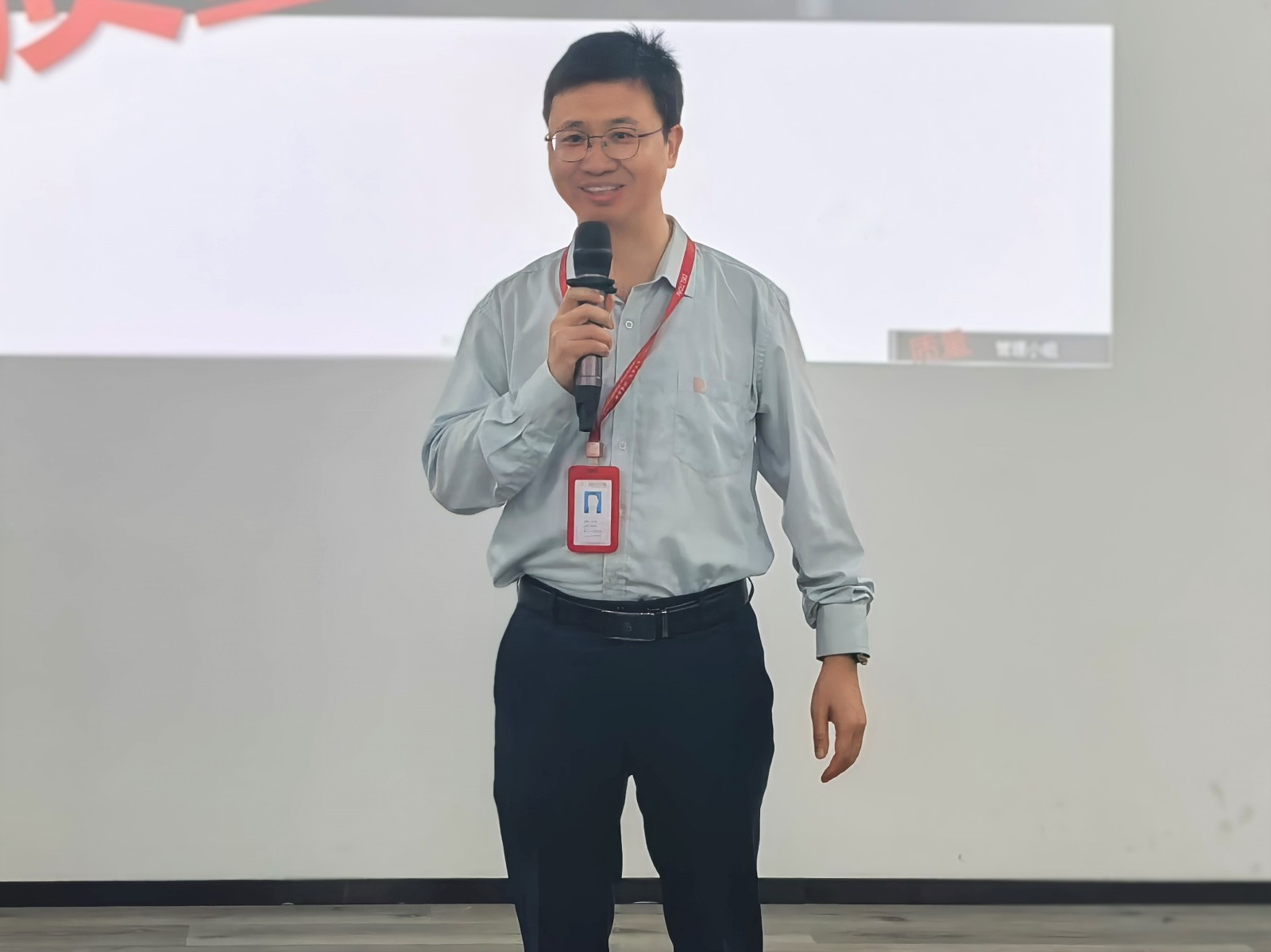
In the concluding session, Mr. Li Qinyuan, Chief Engineer of Delton Technology Group and General Manager of the Guangzhou Plant, delivered a summary address. He expressed high expectations for this QC training and all participants, while charting a clear direction for the team's future quality improvement efforts.
Mr. Li pointed out that as the company grows rapidly, product quality and production efficiency have become critical to its core competitiveness. Currently, the company frequently encounters quality issues in its production operations — often spending substantial time and labor on corrective actions without fully resolving the root causes. The core problem, he noted, lies in a lack of unified quality mindset across the organization, non-standardized problem-solving logic, and insufficient proficiency in professional tools.
He emphasized that this QC training program delivers three core values:
First, to unify the "common language" of quality — enabling employees across all departments and positions to share the same analytical logic, approach, and solutions when facing quality issues. This breaks down communication barriers and improves problem-solving efficiency.
Second, to empower the entire workforce with practical capabilities — helping everyone master standardized, professional QC improvement tools to precisely pinpoint root causes, achieve permanent resolution of quality problems, improve production efficiency, and optimize operational costs.
Third, to build a talent cultivation pipeline — through systematic training and hands-on project work, nurture a cohort of outstanding QC core teams and backbone talent.
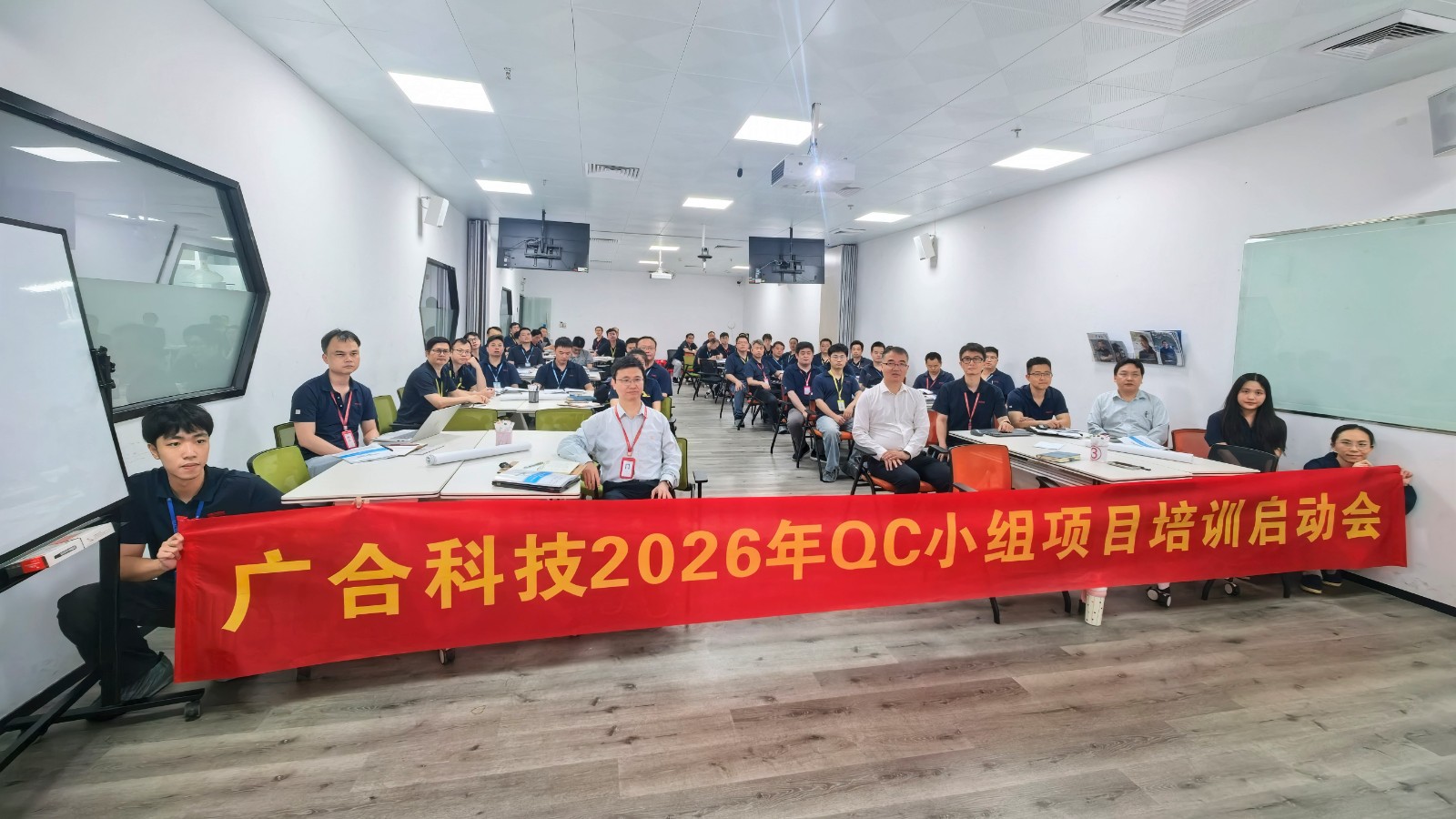
At the same time, Mr. Li also announced that the company will establish a comprehensive incentive mechanism, offering policy support in performance recognition and talent promotion for outstanding QC teams and individuals. This will encourage all employees to proactively innovate and continuously improve — fostering a culture where "everyone values quality, everyone drives improvement, and everyone rises to the challenge." The goal is to make quality improvement a sustained driving force for the company's high-quality development.

Follow WeChat official account
